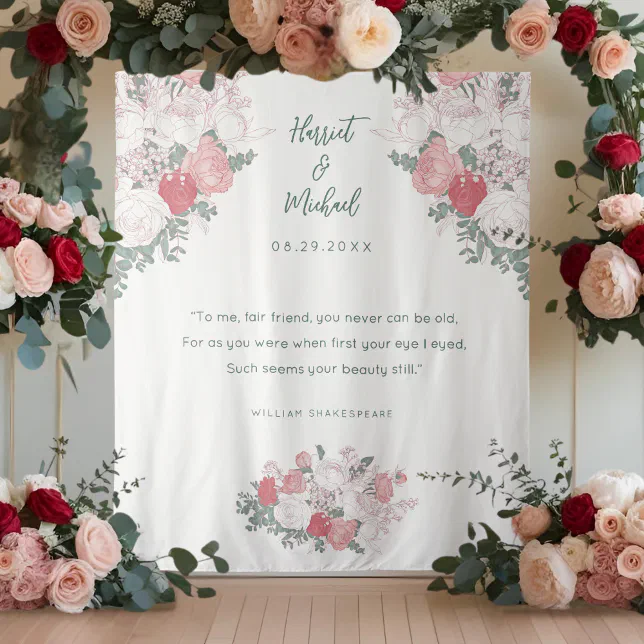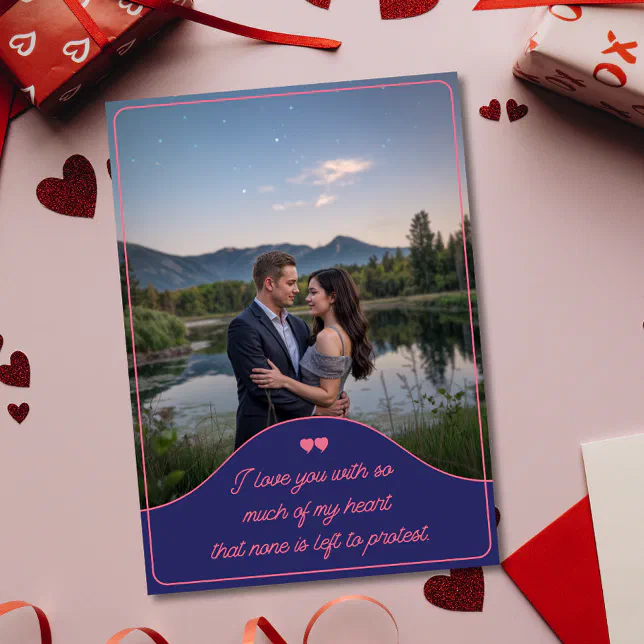

Some of the most quoted lines about love were written for characters who are miserable, scheming, or about to die. Out of context they look lovely in gold foil. In context, a few of them are warnings.
That doesn't mean you can't use them. It's your wedding. But somebody on the guest list took a term of Shakespeare, and it's nicer to hear this from us than from them over the canapés. Here are the lines to look at twice, with who says each one and what's going on at the time. The Shakespeare has all been checked against the plays.
"The course of true love never did run smooth."
A Midsummer Night's Dream. Lysander says it to Hermia just after her father has forbidden them to marry. He means it kindly, and he's right. It's still a line about everything that gets in love's way, and on an invitation it reads like a weather warning. Save it for a speech, when the couple has safely arrived.
"These violent delights have violent ends."
Romeo and Juliet. Friar Laurence says it to Romeo a few minutes before he marries them, and he's telling him to slow down. He goes on to compare their love to fire and gunpowder, which destroy each other the moment they touch. The Friar turns out to be right.
"If music be the food of love, play on."
Twelfth Night. It's the first line of the play and a favourite for the sign beside the dance floor, where it works well. Just don't read on. The Duke's next words are "Give me excess of it; that, surfeiting, the appetite may sicken and so die." He's asking for so much love music that he gets sick of love altogether.
"Love looks not with the eyes, but with the mind."
A Midsummer Night's Dream. It sounds like praise for seeing a person's true self. Helena means the opposite. The man she loves has dropped her for her best friend, and she's saying that love has no judgment at all. Her next line is "And therefore is wing'd Cupid painted blind."
"She lov'd me for the dangers I had pass'd, and I lov'd her that she did pity them."
Othello. He's explaining to the senate of Venice how he and Desdemona fell in love, and it's one of the best accounts of a courtship ever written. It's also Othello. By the end of the play he has killed her. Guests who know the story will find it hard to think about anything else.
"Sigh no more, ladies, sigh no more."
Much Ado About Nothing. It's a song, and a cheerful one. The words that follow are "Men were deceivers ever; one foot in sea, and one on shore, to one thing constant never." The advice is to stop crying over men because they're never faithful. Sing it the night before with your friends. Keep it off the order of service.
"Love is merely a madness."
As You Like It. Rosalind says it while disguised as a boy, and she adds that lovers deserve to be locked in a dark house like any other lunatic. She's teasing the man she's in love with, so it's fonder than it sounds. It would be funny in a card from the maid of honour. On the invitation itself it's a strange thing to announce.
Not only Shakespeare
"Whatever our souls are made of, his and mine are the same." Wuthering Heights. Catherine says it about Heathcliff on the night she agrees to marry someone else. Things go badly for everyone from there.
"It is a truth universally acknowledged, that a single man in possession of a good fortune, must be in want of a wife." Pride and Prejudice. Austen is joking. The sentence is about a neighbourhood that treats any rich bachelor as the property of its daughters. If your guests will get the joke, go ahead.
"Reader, I married him." Jane Eyre. This is the safest of the three, because she does marry him and they're happy. It's worth knowing that their first wedding was stopped at the altar when it came out that he already had a wife, and that she was living in the attic.
What to use instead
Shakespeare wrote plenty of lines that hold up however closely you read them. Two of our favourites:
"I would not wish
Any companion in the world but you."
The Tempest. Miranda says it to Ferdinand, and by the end of the scene they've agreed to marry.
"I wish you all the joy that you can wish."
The Merchant of Venice. Gratiano says it to his friends the moment they're engaged.
There are eleven more, sorted by where they belong on the day, in Shakespeare Wedding Quotes for the Invitation, the Vows and the Toast.
How to check a quote yourself
- Find out who says it. If the speaker is a villain, or is dead by the final scene, look more closely.
- Read the two lines that come after. Most of the trouble on this page is hiding in the next line.
- Make sure Shakespeare wrote it. A lot of the lines that go around online under his name aren't his. Search for the line along with the name of the play, and be suspicious if nobody can tell you the act and scene.
Our own wedding stationery sticks to lines we've checked. You can see it in the wedding collection.
You might also enjoy
Shakespeare Quotes About Love, and the Stories Behind Them
The famous Shakespeare love quotes, the lesser-known ones worth borrowing, and two lines the internet credits to him that he never wrote. With who says each one and why.
WeddingShakespeare Wedding Quotes for the Invitation, the Vows and the Toast
Shakespeare lines that are safe to use at a wedding, sorted by where they belong, with who says each one and what's going on at the time. Plus one famous quote to think twice about.